Labor
Keywords:Labor starts with contractions or the rupture of fetal membranes, i.e. the waters breaking. Always call the childbirth helpline before leaving for the hospital to give birth.
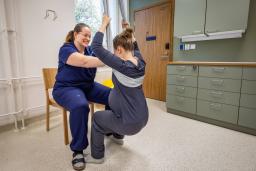
- Labor ward at Women's Hospital: deliveries, including high-risk pregnancies and very premature births in the entire Uusimaa region
- Jorvi Hospital Maternity Unit: deliveries at 35 weeks of gestation at the earliest.
- Hyvinkää Hospital Maternity Unit: deliveries at 35 weeks of gestation at the earliest.
tel. 09 471 71500
The midwife who answers the phone will assess your situation and direct you to the appropriate hospital. Your wishes will be the main consideration in the choice of maternity hospital. Medical criteria and bed availability in the maternity hospitals will also be considered.
You should come to the hospital when contractions
- come regularly less than ten minutes apart
- last for approximately a minute
- feel so intense and painful that you are only able to focus on the contraction.
Before the start of actual labor, contractions have usually already lasted for several hours.
If you suspect that your waters have broken, place a sanitary pad and monitor the situation. If your water has broken and you are experiencing strong and painful contractions, call the childbirth helpline.
If you do not experience strong contractions after your water has broken, call an obstetric emergency department. They will give you more detailed instructions. After the waters have broken, you can often still wait at home for contractions to begin. For the majority of mothers, labor will start within 24 hours of the time when the waters have broken, but you should come to hospital earlier than this.
You have heavy bleeding
- Note: Slight mucous discharge with some blood in late pregnancy in connection with pre-labor contractions is normal.
- If the bleeding is quite heavy, call an ambulance (112)
Severe persistent pain
- Note: If the pain is very severe and accompanied by bleeding or the need to push, call an ambulance (112)
Waters breaking and special situations
- Bloody or green amniotic fluid
- The baby is in a breech position
- Your pregnancy is a multiple pregnancy
Changes in fetal movements
- If the fetus does not move normally in the uterus
Sudden other symptoms
- Severe headache, visual disturbances, upper abdominal pain or severe itching e.g. on the soles of the feet, palms, or abdomen
Emergency services during pregnancy and labor
At the obstetric emergency departments, we treat patients in need of urgent care. Please call the hospital before seeking medical attention at the emergency department or coming in to give birth.

What to bring to hospital?
- your maternity health clinic card (neuvolakortti) and a photo ID
- any medication you take regularly
- equipment for personal hygiene, such as toothbrush and tooth paste, deodorant, shampoo, etc.
- clothes for yourself and the baby if you are planning on transferring to the Family Nest Hotel after giving birth
- comfortable, casual clothes if you want to wear your own clothes in the hospital (such as dressing gown, leisure outfits)
- non-slip indoor shoes
- camera
- relaxing music
- thermal packs etc.
- something to eat for the support person, as well as comfortable clothes and shoes
- lip balm
- nursing bra
- nursing pads
- carrier sling
- reusable cloth diapers if you want to use them with your baby from the beginning (you will also have to wash them yourself)
- For going home (the person picking you up can bring these):
- baby clothes and child car seat
- clothes for the mother
Please leave any valuables, such as jewelry and other valuable items at home.
Before you arrive at the hospital, please fill out the form Thoughts about the Coming Delivery and print it out for taking with you.
The labor process
Labor is often preceded by irregular, sometimes even quite painful contractions, which can last for several days with first-time mothers. This is called the latency stage. The latency stage is often possible also when the waters have broken.
An important task of the latency stage is to ripen the cervical canal of the uterus for childbirth. In this case, the best and safest place to wait for labor to start is at home. You cannot speed up or slow down the latency stage yourself. Therefore, it is useful to rest between contractions and relax and gather strength for labor. Do things that feel comfortable and good.
In the early stages of labor, you can, for example, take a walk, perform everyday tasks at home, or take a nice and long warm shower. If you are very much in pain and tired due to prolonged contractions, call the hospital. A midwife can give tips on drug-free pain relief, provide support and, if necessary, you can get pain relief when you are in the hospital.
When you arrive at the hospital, the midwife will meet you and check your baby's condition and the stage of labor. If your labor is just starting, you can have a discussion with your midwife on which option is best for waiting for your labor to begin.
Sometimes childbirth can involve significant bleeding, in which case you will require donated blood. In order to ensure your safety, when you arrive to give birth we will take a blood sample from you to perform a cross-matching test required for blood transfusions. This is to examine the clinically relevant red cell antibodies from the patient’s plasma and to obtain a blood count analysis, where we examine the red and white blood cell and platelet counts and hemoglobin level. If the samples have already been taken from you previously in our hospital, within a period of five days, they do not need to be taken again.
Labor is ongoing when contractions open the uterine orifice. They come regularly at intervals of less than ten minutes, last for about a minute, and are so strong that you need to focus on them.
A support person can make you feel better, for example, by massaging, encouraging, holding your hand, or just being present. The support professional has the opportunity to establish a relationship with the newborn from the very first few moments. If you cannot take the newborn into skin contact with you after the birth, your support person may hold the baby close to their skin. The support person may also participate in a planned Cesarean section.
You are free to photograph your own family during childbirth. However, not all members of our personnel wish to be photographed. We hope that you will respect this wish.
At Women’s Hospital and Jorvi Hospital, the identification wristbands for birth partners are in use. The birth partner is required to wear the wristband the entire time they are in the hospital. The wristband is removed upon discharge. The aim of the wristbands is to help us distinguish birth partners from other, potentially unauthorized persons at the wards. Read more from here.
When labor is in progress, we will take care of you in the delivery room. Together with the midwife, you can discuss your wishes regarding the childbirth and different pain relief options. The first stage of labor can take several hours. Please make yourself comfortable in the delivery room: you can find yourself a good position and relax by listening to music. If you wish, you can take your own pillow with you and some small, easy-to-store and digestible snacks you may want. Pain relief will be provided on the basis of your wishes and needs.
Our midwife will monitor the well-being of you and your baby and the progress of labor during childbirth. The midwife uses, for example, the fetal heartbeat and uterine contractions, as well as external examination and bimanual pelvic examination in the monitoring.
The second stage of labor begins when the uterine orifice is fully dilated (10 cm) and the child's presenting part, head or buttocks, has lowered. At this point, you will feel a strong pressure and a need to push. Sometimes you have to wait for the baby’s presenting part to lower down in the canal and the need to push to start, even if the uterine orifice is fully dilated.
The second stage of labor lasts for approximately 30–90 minutes. You can push in many positions, and we recommend that you try what feels natural to you already before the start of this stage. For example, you can use a mattress, an exercise ball, or a birth stool. The midwife will assist you in this. The support person can also help you in finding a good birthing position. The second stage of labor ends with the birth of the baby.
We will lift a newborn in good condition into skin contact with you. The support person may cut the umbilical cord if he/she wishes. Skin contact helps the newborn to adapt to life outside the womb, and in skin contact, the baby will also begin to seek to nurse. As a rule, the baby is ready to nurse for the first time after about an hour after birth.
After the birth of the baby, the uterus continues to contract, and usually within an hour after the baby is born, the soft placenta is delivered. The emergence of the placenta is the final stage of childbirth. If an incision has been made in the perineum or it has teared a bit during the delivery, we will suture any injuries after the placenta has been delivered.
Before being transferred to the maternity ward, the midwife will examine, measure, and weigh the baby. All newborns also receive a vitamin K injection, which will boost the coagulation factor metabolism of the baby and prevents any internal bleeding. In the delivery room, it is possible for you and your support person to get something to eat, before being transferred to the maternity ward. You also have the opportunity to take a shower.
On the maternity ward, a midwife or a pediatric practical nurse will have a discussion with you to go through your delivery. If something about the delivery continues to bother you, you can always contact the hospital from home.
We perform elective or planned Cesarean sections, for example, due to the baby being in a breech position or if there is a disproportion between the size of the baby and the mother’s pelvis. If you are coming for a planned Cesarean section, we will prepare you for surgery and check the condition of the fetus first thing on the morning of the surgery. The Cesarean section may have to wait depending on the situation in the operating room.
When the operating room is ready, our midwife will escort you and your support person to the surgical ward. We will place an i.v. line on your hand and a catheter in your bladder. We do most of the planned Cesarean sections under spinal or epidural anesthesia. We will wash the surgical site and protect it with sterile drapes.
The baby will be born in about 10 minutes, after which you and your support person can see the baby. The midwife will then examine the newborn’s condition and, if necessary, we will call a pediatrician. If the baby is doing fine, we will place him on your chest in skin contact. Also the support person can take the baby in skin contact. To prepare for this, the support person should bring a shirt that can be opened at the front.
At the same time, the operation will move forward. We will squeeze the placenta out and clean the uterus. We will close the skin either using sutures or staples. After the operation, we will be monitoring your status in the recovery room for about two hours.
Later, the midwife will measure and weigh the newborn. All newborns also receive a vitamin K injection, which will boost the coagulation factors of the baby and prevent any internal bleeding.
When you are transferred from the recovery room to the maternity ward, we will help you place the baby in skin contact with you and assist you in the first breastfeeding. We will monitor your recovery and pay special attention to pain management. You will be able to get up on your feet on the same day, if your condition allows this. You can take a shower the next day. It is possible for a mother who is feeling well to be discharged after a trouble-free Cesarean section as early as 24 hours after the operation. In most cases, discharge is possible on the second or third day.
There are family rooms in all the maternity wards at HUS maternity hospitals. The family rooms cannot be reserved in advance. The rooms are intended for families where the support person can be present throughout the ward stay. Our personnel will be available 24 hours a day. It is worth noting that we cannot always arrange for a family room, for example, if there are a lot of patients on the wards.
All our hospitals also have rooms for more than one mother and newborn. In addition, the Women's Hospital also has salon rooms for those who have given birth and are in good condition. The rooms provide a space where the mothers and babies are cared for after birth for six hours before going home or being transferred to the Family Nest Hotel.
In Helsinki, in the vicinity of Women's Hospital there is a Family Nest Hotel (Scandic Hotel Meilahti), which has 19 family rooms and 24-hour nursing staff. You can transfer to the Family Nest Hotel from the salon room after a normal vaginal delivery and monitoring, if you and your baby are feeling well and neither of you need to have any demanding special monitoring.
After the delivery, the midwife will discuss with you what your wishes are regarding postpartum care. The discussion will also go through the medical and nursing point of view on what would be the best place of care for you and your baby. The decision on the place of care will be made with you individually only after childbirth.
The date of discharge after childbirth is individual, and depends on the condition of the mother and baby. The average stays on the ward after childbirth are
- approximately 1.5–2 days for first-time mothers
- 1–2 days for mothers who already have children
- 1–3 days for mothers who have given birth by Cesarean section.
A mother who has given birth before and a newborn who are in good condition, can already be discharged 6–24 hours after giving birth. Those who have been discharged to outpatient care have a follow-up visit on the hospital's maternity ward 3–5 days after giving birth.
At the appointment clinic for postpartum women, we provide care and guidance to families of newborns after discharge from the hospital.
If your baby needs a follow-up appointment during the first two weeks, for example, due to early discharge, jaundice, weight monitoring, or hearing tests, we will make an appointment before your discharge either at the maternity hospital or the midwife making house calls.
We can also book a remote appointment or a home visit, if you need guidance on breastfeeding or reducing the use of complementary milk. If your baby is discharged at the age of less than 24 hours, the pediatrician will re-examine the baby at the maternity hospital at the age of 2–5 days.
Midwife's house calls are available for those who have given birth at Women's Hospital or in Jorvi hospital. A house call can be reserved as a follow-up appointment after an early discharge, for weight monitoring or short breastfeeding guidance during the first two weeks of the baby's life. You can inquire about the possibility of a midwife's house call when you leave the hospital. Our midwives travel by car, so you need to get a parking space for the car for the duration of the visit. Due to this, house calls to Helsinki city center will be considered on a case-by-case basis. The service is available in Finnish, Swedish, and English.
The midwives of Women's Hospital and Jorvi Hospital make house calls in the Espoo, Kauniainen, Helsinki, Vantaa, and Kirkkonummi areas. Pets are requested to be placed in another room for the duration of the visit.
A midwife's house call is not a substitute for a house call conducted by the child health clinic (neuvola) which has a more extensive content and concerns the well-being of the whole family. Please book a home visit from your child health clinic at the latest when you are leaving the maternity hospital.
- Women's Hospital: all deliveries of babies born before week 35 of pregnancy
- Jorvi Hospital: deliveries of babies born in week 35 and later
- Hyvinkää and Lohja hospitals: deliveries from pregnancy week 35 and later
Each HUS maternity hospital has a pediatrician on call round the clock and a neonatal ward, pediatric ward or monitoring unit where the newborn can be treated after birth. Extremely premature infants in need of intensive care are taken to the Neonatal Intensive Care Unit Saari at Women's Hospital. Parents are encouraged to be present and take part in the care of their baby from the very beginning. The nurses help and give advice in taking care of the baby.
If necessary, you are entitled to an interpreter service during your treatment. The interpreter may be present at the hospital or interpret via telephone. When you arrive at the hospital, please inform the personnel taking care of you, if you need an interpreter.
Newborn
The pediatrician will examine the newborn before discharge from the hospital at approximately 1–2 days of age. Children examined when under 20 hours of age will be invited for a re-examination. The physician will examine the baby and check the data on the mother's health, the pregnancy and labor and on the baby's condition immediately after the delivery and during the monitoring on the ward.
In the examination of a newborn, the physician will...
- evaluate the baby’s general condition, color, muscle tone, irritability, and primitive reflexes, such as gripping and Moro reflex
- assess the external features and skin
- auscultate the heart and lungs
- feel the femoral arteries
- examine the red reflex, oral cavity, palate, cranial sutures, and fontanels
- palpate the abdomen, kidneys, and other internal organs
- check the hips and external genitalia.
To rule out congenital hypothyroidism, we take a blood sample from the umbilical cord of each newborn immediately after birth, and we use the sample to perform a thyroid-stimulating hormone assay (TSH) which represents the status of thyroid function.
In addition, with parental consent, we will take a screening blood sample (VasSeu1) for all newborns at the age of 2–5 days to screen for metabolism disorders. The test is performed to screen for rare, hereditary congenital metabolic and immunodeficiency diseases that are difficult to diagnose, but for which treatment exists.
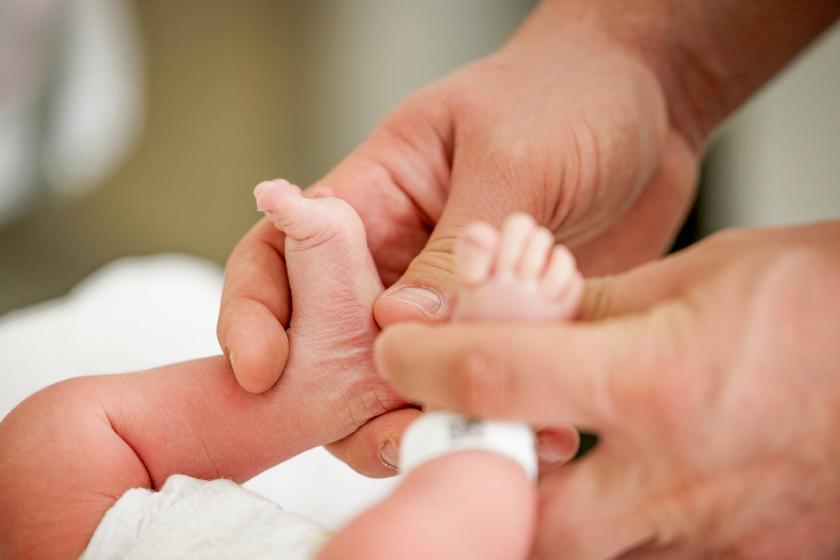
For screening, the baby's heel will be pricked to obtain a blood sample for testing. If you are still in the hospital, our nurse will take a sample on the ward. If you have already discharged from the hospital, the sample is most often taken by a midwife during a house call. If you want, you can also visit a HUSLAB laboratory to provide the sample. At the laboratory, please be prepared to provide your baby's personal identity code, which they already received in the hospital. You can find the personal identity code on the child's hospital bracelet, on the documents printed for you upon discharge from the hospital, or online in the My Kanta pages.
Before you are discharged, we will also examine the baby's hearing (hearing test).
If anything abnormal is detected in the check-up or screenings, the baby will be referred to further follow-up or necessary treatment.
Laboratory sampling points after discharge
In accordance with the Finnish national vaccination program, children under 7 years of age who are at an increased risk of tuberculosis infection are entitled to free BCG vaccination. The National Institute for Health and Welfare determines who belongs to the risk group. The baby’s need for vaccination will be checked during your visits to the prenatal clinic during your pregnancy or at the latest on the maternity ward at the hospital. We give the BCG vaccine to babies born in HUS, and belonging to a risk group, at the hospital’s outpatient clinic at the age of 2–3 weeks.
Service locations
Frequently asked questions
All parents receive support in breastfeeding and baby care according to their individual needs. Some people need more support, and others are more familiar with the matters and need less advice. If you feel that you need more support and advice on baby care or breastfeeding, mention it to your personal nurse.
We recommend participating in any info sessions to all parents at the ward and reading any material available in the room or given to you personally. A lot of information on the postnatal period, baby care and breastfeeding is also available on the Baby Journey digital path. You can start using it even after giving birth.
Absolutely! Research shows that prenatal classes and preparing for labor improve the childbirth experience.
You can attend HUS maternity hospitals’ prenatal classes. See more information about them here.
The Naistalo website in Terveyskylä has reliable, current, and research-based information on pregnancy and childbirth in Finnish and Swedish.
In addition, you should read the material on the Baby Journey digital path. The digital path has been enabled for you at your first screening appointment. If this is not the case, contact the maternity outpatient clinic and request that the digital path is enabled for you.
If you are having painful and regular contractions less than 10 minutes apart so that you cannot cope at home anymore, if you suspect your water has broken, if you have bloody discharge, if the baby does not move normally, or if you develop sudden symptoms, such as intense headache, visual symptoms, upper abdominal pain, intense itching on your soles, palms or stomach, call the childbirth helpline tel. 09 471 71500. You can always call even if you are unsure about your situation. A midwife who answers the call will assess with you if you should go to the hospital or if you can still monitor the situation at home.
Call the emergency number 112 if you feel the need to push, you bleed heavily, you have continuous, intense pain around your womb, or if the baby is in breech position and the maternity outpatient clinic has instructed you to call an ambulance when your water breaks.
We treat childbirths and perform Caesarean sections in our three hospitals: Jorvi Hospital, Hyvinkää Hospital, and Women’s Hospital. The lower-risk, planned Caesarean sections are performed at Jorvi and Hyvinkää Hospitals. Planned Caesarean sections that involve elevated risks related pregnancy or childbirth are centralized to Women’s Hospital.
We follow the same principles and instructions in all our maternity hospitals. Our goal is to ensure a safe childbirth and a positive childbirth experience for all. We are committed to the Baby-Friendly Initiative of WHO and UNICEF.
Bring with you at least the following: neuvolakortti or maternity notes, identification, your regular medication, personal toiletries, nursing bra and nursing pads, your own pain relief tools (such as TENS), clothes to put on when you go home (hospital clothes and supplies are available for the birthing person and the baby while you stay in the hospital); for the birthing partner, bring food, a shirt or a hoodie that opens at the front, so they can easily hold the baby in skin-to-skin contact, and a change of clothes; a camera or a video camera, chargers, and a baby car seat, which you should keep in your car until you leave.
We recommend that you leave all jewellery, piercings and valuables at home, and remove artificial or gel nails for safety and hygiene reasons.
In addition to the things listed above, you can also bring a water bottle, snacks, indoor shoes, and a Bluetooth speaker for playing music.
During childbirth, also when pushing, it is best to listen to your body. In the expulsion stage, your body and the pressure from the baby guide you to push, and the midwife can also help and encourage you.
Usually, you can eat and drink if you feel up to it. Most people find it best to eat light foods that are easy to digest, as labor may often cause nausea.
Birthing persons in delivery rooms are offered the same meals as on the ward (breakfast, lunch, dinner, and evening snack), but often people have poor appetite or no appetite at all during labor. It is best to bring with you some food items or snacks that you enjoy. After the delivery, you and your birthing partner are offered a light snack in the delivery room before you are transferred to the ward.
If there are any changes in the course of the labor, or we need to prepare for a possible caesarean section, we may need to ask you not to eat for safety reasons.
Yes, you can.
- In Hyvinkää Hospital, both the labor unit and the maternity ward have a fridge, a microwave oven, and a small freezer for patients’ food.
- The labor unit in Women’s Hospital has a fridge, but no microwave oven.
- The maternity ward in Women’s Hospital do not have fridges or microwave ovens.
- The Jorvi Hospital, both the labor unit and the maternity ward have has a fridge and a microwave oven.
- In the Family Nest Hotel, all rooms have a fridge, and a microwave oven is available in the common room.
The hospital does not provide food for the birthing partner during the delivery, so they should bring their own food. They are also welcome to visit the hospital cafeteria.
After the delivery, the birthing partner’s meals are included in the hospital fees if you are staying in a family room. In the Family Nest Hotel, meals for the birthing partner are not included.
Expressing milk by hand means that you extract milk from your breasts by pressing with your hands. It can be used to start lactation after giving birth and to collect breast milk. You can start expressing milk by hand already before giving birth, from week 36 onwards. The aim in expressing milk during pregnancy is just to learn the technique. There is no need to collect milk for storage. However, if you do lactate, it is a good idea to store the milk in small syringes or bags, and freeze it. You can bring the frozen breast milk with you to the hospital when you come to give birth. It is best to pack it into a cooler bag.
Naistalo in Terveyskylä has a video on how to express milk. (In Finnish) NOTE! The person on the video has given birth a few days earlier, so they produce much more milk than a person who has just given birth or is still pregnant.
We kindly request to refrain from products with strong scents. Open fire is not allowed in the hospital, which means that candles are not allowed. However, you can use LED candles and short, battery-operated string lights in the delivery room and the ward. You can also bring your own pillow if you wish, but large curtains, tapestries, rugs, and other decorative textiles are not allowed for hygiene and fire safety reasons.
- Hyvinkää Hospital has two pools, one in the delivery room and one in a separate pool room, where it is also possible to give birth in.
- In Women’s Hospital, Luotsi has three fixed pools which can be accessed from six delivery rooms. Aallokko (for low-risk births) has two fixed pools, which can be accessed from four delivery rooms.
- Jorvi Hospital has six fixed pools which can be accessed from 11 delivery rooms.
The number of births in the hospitals vary greatly and it is difficult to predict in advance if the rooms will be full. However, the situation can change fast. Delivery rooms become available again quickly as the babies are born and families transfer to the ward.
The midwives who answer the childbirth helpline’s calls always have current information on all labor units in HUS hospitals, and they assess with you if you should wait until a delivery room becomes available or if you should go to another HUS labor unit.
Nearly all rooms in our maternity hospitals are family rooms. We aim to arrange a family room for everyone who wants one, but unfortunately they are not always available for all. You can tell your attending midwife that you would like to have a family room already before the baby is born. However, you cannot reserve a family room at this stage. After the baby is born, you will be informed if a family room is available.
In a family room, you will need to pay a double fee for each treatment day. In Hyvinkää Hospital, all rooms at the ward are single rooms, which are also suitable as family rooms.
After a vaginal delivery, the usual hospital stay is 1.5 to 2 days. After a caesarean section, the usual hospital stay is 2–3 days. It is also possible to go home sooner than this (less than 20 hours after giving birth), if you fulfil the criteria for early discharge.
The visiting hours for the spouse or birthing partner and the baby’s siblings are from 10 a.m. to 8 p.m. Other visitors are welcome from 6 to 7 p.m.
This is possible in Hyvinkää Hospital, but we recommend that when staying in a family room at the ward, only the baby and the parents or the birthing person and their support person spend nights in the family room. The baby's siblings are welcome to visit every day from 10 a.m. to 8 p.m. For a small child, the hospital room is a boring environment, and nurses visit the room around the clock. The baby may also keep the older sibling awake during the night.
In Women’s Hospital, the older sibling is welcome to stay in the family room in the Family Nest Hotel.
In Jorvi Hospital, one birthing partner may sleep in the family room, but an older sibling cannot stay the night at the maternity ward.
For your hospital stay (=from the day you are admitted to the labor unit to the day you are discharged from the ward), you are charged a daily hospital fee. In 2026, it is EUR 71.50 per day. For family rooms, the daily hospital fee is charged from both the birthing person and the support person, which means that the daily hospital fee totals EUR 143 per day. An outpatient clinic fee, EUR 71.30, is charged for outpatient clinic and emergency clinic visits.
For information on HUS client fees, please visit: Client fees | HUS
Do not hesitate to bring it up at neuvola. Nearly all people are nervous and afraid of childbirth, but we speak of actual fear of childbirth when the fear begins to hinder day-to-day life and overshadows the joy of pregnancy. About 5–6 percent of all pregnant people experience this kind of fear.
If necessary, the maternity health clinic will refer you to treatment for fear of childbirth. A public health nurse or a doctor at your neuvola can make the referral.
Further information
We have YouTube videos where our midwives provide information on childbirth, discharge from the hospital, and on the first days home with the baby.
In labor
- YouTube: Onset of labor
- YouTube: Dilation stage
- YouTube: Childbirth
- YouTube: Spinal and epidural anaesthesia
- YouTube: Breech delivery
- YouTube: Vacuum-assisted delivery
- YouTube: C-section
- YouTube: Delivering twins
At the maternity ward
- YouTube: Postnatal care in maternity ward
- YouTube: Baby's special care
- YouTube: Baby's examination by a paediatrician
Recovery, discharge, and caring for the newborn
The online Baby Journey Guide provides information on the first weeks after childbirth.
All our maternity hospitals are committed to the care policies of the World Health Organisation (WHO) and Unicef’s Baby Friendly Initiative. We want to give you and your baby a smooth start in breastfeeding and promote good family interaction.
It is important for us to take into account the wishes and needs of each family. Even if you are not breastfeeding, you can feed and nurture your baby by being aware of their needs and offering lots of closeness.
We in the hospital
- We offer help for getting started with breastfeeding.
- Our staff is trained in providing support and guidance in breastfeeding.
Your steps
- Prepare for breastfeeding during pregnancy by gathering information.
- Keep your baby in good skin-to-skin contact to support a good start in breastfeeding.
Breastfeeding is a skill that requires practice. Your own preparation and the help of our staff will allow you to learn how to recognize your baby’s hunger signals and breastfeed in a baby-led pace. You will also find a good breastfeeding position and know how to follow the safety signs of sufficient breastfeeding.
Support for breastfeeding is also available after you are discharged from the hospital. After the hospital stay, you can get guidance from the child health clinic (neuvola) and peer support from the Finnish Association for Breastfeeding Support, Imetyksen tuki ry.
Gynecology and Obstetrics
Units related to the service
Appointments for postpartum women, Women's Hospital
At the appointment for those who have given birth at Women's Hospital, we provide advice and guidance to the families with newborns. We also make midwife's…
Updated: 15.09.2026