Scientific research of the Diagnostic Center
At the Diagnostic Center, we conduct scientific research and teaching in eight specialties of clinical laboratory medicine and medical imaging in collaboration with the University of Helsinki.
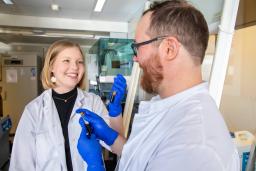
We are responsible for the statutory research and teaching obligations of university hospitals for diagnostic specialties, in cooperation with the Faculty of Medicine of the University of Helsinki. Our research activities and product development is productive and innovative.
Bacteriology and immunology
The main themes of research in bacteriology and immunology include, for example, immunological recognition mechanisms and their failures, the pathogenesis and diagnosis of autoimmune diseases, host-microbe interactions, microbial virulence mechanisms, bacteriophages, the pathogenetic mechanisms of infectious diseases, the role of inflammation in systemic diseases, emerging infectious threats, the development of new treatment methods, and the exploration of vaccination options.
BioMag laboratory
BioMag is a state-of-the-art research laboratory for medical, technical and psychological research located in the main building of Meilahti Hospital.
In the laboratory, we also conduct clinical research to study details related to brain diseases, cardiac arrhythmias, and electrophysiology. Research objectives include, for example, the development of monitoring and rehabilitation of patients with cerebral infarction, brain injury, and spinal cord injuries.
Clinical pharmacology
The main topics of research in clinical pharmacology include pharmacokinetics, pharmacogenetics, drug interactions, and drug safety
In its field of research, the unit is at the top of international results, as evidenced by the fact that the unit’s research group IndiViDrug received maximum scores in the category “Research of the participating community represents the international forefront in its field” in the international evaluation of research and doctoral education conducted by the University of Helsinki in 2005–2010.
Clinical chemistry and hematology
The focus areas of clinical chemistry and hematology research include translational cancer research, coagulation disorders, myocardial damage research, and laboratory diagnostics of biomarkers.
Medical physics
Medical physics is a field of research in applied physics that aims to improve the quality of medical and clinical applications. The aim of research is to ensure that medical professionals have the best possible knowledge and tools to improve diagnostics and treatments.
Medical and clinical genetics
The main themes of research in medical genetics include the identification of new hereditary diseases and the hereditary components of diseases, identifying the hereditary nature of diseases and their gene mutations and/or risk alleles, studying the interaction between genes and environmental factors, investigating gene function and regulation, epigenetics, genetic diagnostics, cancer genomics, and molecular pathogenesis.
Pathology
As a field of research, pathology focuses on investigating the causes and mechanisms of diseases and developing new morphological and molecular biological diagnostic methods. The main themes of research in pathology include, for example, new tumor markers and their application in cancer diagnostics, the mechanisms of cancer development and spread, brain diseases (neurodegenerative), muscle diseases and muscle injury healing, chromosomal changes and mutations in cancers, as well as digital pathology and AI technologies.
Radiology
Radiology has research groups and doctoral candidates in the fields of neuroradiology, cardiac imaging, musculoskeletal radiology, pediatric radiology and metabolic imaging, among others.
Virology
The main themes of the research conducted in virology are zoonotic viruses (particularly those transmitted by rodents and arthropods, such as hantaviruses and flaviviruses), the pathogenesis of new DNA viral diseases and innovative diagnostics, papillomaviruses and cervical cancer, molecular diagnostics and pathogenesis of chlamydial infections, and molecular interactions between viruses and their host cells.
20
published doctoral theses
600
research articles
20%
of HUS studies
In cooperation
Helsinki Biobank (opens in new window, links to another website)
In our research, we utilize samples and data resources stored in the biobank. Read more about biobank operations on the website of Helsinki Biobank.
Research Programs Unit of the Faculty of Medicine (opens in new window, links to another website)
The Research Programs Unit (RPU) of the Faculty of Medicine consolidates demonstrated research excellence, with focused research programs addressing the greatest challenges in human health.
Research news
A blood test aids the diagnosis of cervical lymphadenitis in children
A study conducted at HUS confirmed the reliability of a blood test-based method for diagnosing cervical lymphadenitis caused by nontuberculous mycobacteria…
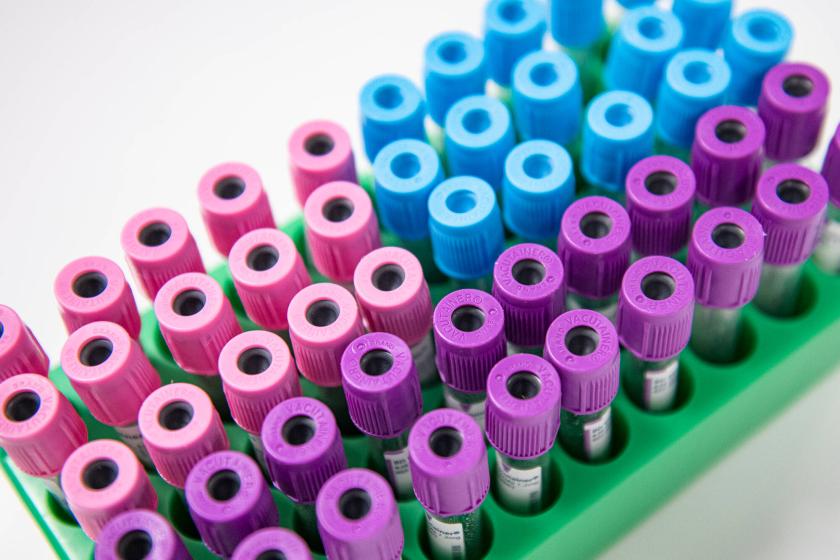
Extensive analysis provides new insights into carrier risks for rare diseases
A study conducted by HUS and the University of Helsinki revealed that couples with Finnish genetic ancestry have approximately a 3% risk of being carriers…
Updated: 17.06.2026