Cerebral aneurysm's location predicts cerebral hemorrhage's mortality
Keywords:An international study led by HUS Neurosurgery revealed that the location of a cerebral aneurysm has a significant effect on the prognosis of life-threatening cerebral hemorrhage. Ruptured aneurysms in the back of the skull especially have the highest risk of sudden death.
Subarachnoid hemorrhage, SAH, is caused by a ruptured aneurysm, a bulge, in a cerebral artery. SAH is one of the deadliest types of cerebrovascular accidents. Approximately one in four SAH patients die suddenly before reaching a hospital, and even among those who make it to the hospital, up to one in five die within one month from the incident.
The effect of aneurysm location on the mortality of SAH patients has previously been studied in patients who made it to a hospital, but high-quality population-based register data that includes sudden deaths has never been used previously.
The international study, which was published in the journal Neurology, examined the effect of aneurysm location on the survival prognosis of SAH patients in Finland and New Zealand from nearly two decades. The research data included over 13,000 SAH cases, even including data on sudden deaths outside hospital caused by ruptured aneurysms.
Hemorrhage in the back of the skull is particularly lethal
The results show that aneurysm location has a significant effect on the risk of death. Ruptured aneurysms in the back of the skull, that is the basilar and the vertebral arteries, were most likely to cause death. More than half of the patients died within a month from the incident, and one third of the deaths occurred before the patient reached a hospital.
Ruptured aneurysms of the middle cerebral artery also caused several deaths. However, aneurysms in the front of the skull caused fewer deaths and their overall prognosis was better.
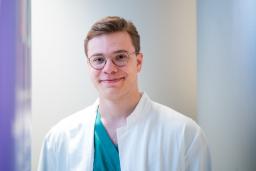
“The majority of differences in the mortality of various aneurysm locations is due to fluctuation in sudden death, not in the prognoses of hospitalized patients. A ruptured aneurysm in the back of the skull is more likely to cause sudden death than in other locations, because the posterior cranial fossa is anatomically confined, and the brainstem centers controlling breathing and blood pressure are located there,” explains the lead author, Doctor of Medicine Aleksanteri Asikainen from the University of Helsinki.
An increase in the most dangerous aneurysms
During the monitoring period, the overall mortality of SAH declined, which was mainly due to decrease in the number of sudden deaths. However, the relative number of ruptured aneurysms in the basilar and vertebral arteries increased by approximately one third.
“It is important to find out why the proportion of aneurysms in these locations is on the rise, so that we can get to the underlying cause. The cause may be changes in risk factors in the population,” says Asikainen.
In addition to Asikainen, Finnish members in the research project's core group included Ilari Rautalin, associate professor and physician specialising in neurosurgery at HUS, Miikka Korja and Rahul Raj, both neurosurgeons and associate professors at HUS, and Jaakko Kaprio, professor of genetic epidemiology at the University of Helsinki.
“The next important step, in addition to further research on improving inpatient care, is to reduce the number of sudden deaths caused by SAH, as it is likely the most efficient way to reduce SAH’s burden of mortality,” the scientists conclude.
Research article: Case Fatality of Subarachnoid Hemorrhage by Aneurysm Location | Neurology
Published online in the journal Neurology on April 3, 2026.
In university hospitals research is part of treatment: new research outcomes make treatment practises more efficient and help focus treatments correctly. We work in close collaboration with the University of Helsinki and other universities, and we publish ca 3,000 peer-reviewed research articles annually.
Today’s research provides better care in the future.
The HUS media service is available for the media Mon–Thu 10:00 a.m.–4:00 p.m. and Fri 10:00 a.m.–3:00 p.m., tel. 050 427 2875, or via e-mail: viestinta@hus.fi.