Most people who died from a brain hemorrhage never received neurosurgical treatment
Keywords:An international study led by HUS Neurosurgery discovered that more than 70 percent of those who died from a subarachnoid hemorrhage never made it to neurosurgical treatment. The proportion was highest in remote areas.
Subarachnoid hemorrhage, SAH, is caused by a ruptured aneurysm, a bulge, in a cerebral artery. SAH is one of the deadliest types of cerebrovascular accidents. About a third of those affected die within a month. Only urgent neurosurgery can save the patient’s life.
Out-of-hospital mortality from SAH has previously been studied mainly in urban areas where neurosurgical treatment is readily accessible. In contrast, little information has been available from regions where the nearest neurosurgical unit may be hundreds of kilometers away.
The study, published in JAMA Network Open, examined the proportion of SAH deaths that occurred without any neurosurgical treatment and how distance from a neurosurgical unit affected this proportion. The study data included nearly 13,000 SAH patients in 41 hospital districts across Finland and New Zealand from 2001 to 2017.
The study was exceptional in that it also included patients who died suddenly before receiving hospital care.
Improving neurosurgical treatment alone is not enough
Of those patients who died within a month of SAH, 71 percent never received neurosurgical treatment. The proportion was nearly the same in Finland and New Zealand, but it increased as the distance to the nearest neurosurgical unit grew. The highest proportion was observed in rural archipelago regions in Finland and in the mountainous regions of New Zealand.
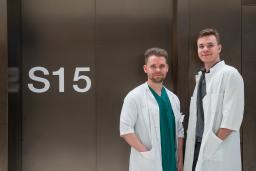
“Most SAH deaths occur before neurosurgical treatment. That is why it is not enough to improve neurosurgical care alone. Reducing the mortality rate requires evaluating the entire care continuum, starting with preventive care at health centers and in occupational health care,” says the lead author Aleksanteri Asikainen, MD, PhD from HUS Neurosurgery.
Deaths before treatment have declined
During the study period, the proportion of all SAH patients who died without receiving neurosurgical treatment decreased by 20 percent in Finland and by 18 percent in New Zealand.
“This development is encouraging, but prehospital deaths are still common, especially in areas where distances to the nearest neurosurgical unit are long. These deaths are not represented in hospital mortality statistics, meaning that analyses based solely on hospital data may underestimate the true mortality associated with SAH. That is why we need to be careful when comparing in-hospital SAH mortality rates and also take into account out-of-hospital deaths,” says Ilari Rautalin, principal investigator of the study, associate professor and physician specializing in neurosurgery at HUS.
In addition to Asikainen and Rautalin, Finnish members of the research group included Miikka Korja, HUS neurosurgeon and associate professor, and Jaakko Kaprio, professor of genetic epidemiology from the University of Helsinki. The study was conducted in collaboration with Auckland University of Technology’s National Institute for Stroke and Applied Neurosciences.
In university hospitals research is part of treatment: new research outcomes make treatment practises more efficient and help focus treatments correctly. We work in close collaboration with the University of Helsinki and other universities, and we publish ca 3,000 peer-reviewed research articles annually.
Today’s research provides better care in the future.
The HUS media service is available for the media Mon–Thu 10:00 a.m.–4:00 p.m. and Fri 10:00 a.m.–3:00 p.m., tel. 050 427 2875, or via e-mail: viestinta@hus.fi.