Cleft lip and palate
Keywords:Cleft lip and cleft palate are the most common type of birth defect. We treat cleft lip and cleft palate at Park Hospital and at the New Children’s Hospital and have nationwide responsibility for these treatments.
Some 85 newborn babies are diagnosed with a cleft lip and/or cleft palate in Finland each year. They are treated at Park Hospital and New Children's Hospital.
The groundwork in treating cleft lip/palate is laid by the corrective surgery that is performed during the first year of the child’s life. By the child’s first birthday, their appearance will have been corrected as far as possible while attaining normal function of the lip, nose and palate.
We advise and assist families, children and adolescents with problems related to cleft lip/palate. Treatment and monitoring continue until the child’s growth ends, and beyond that if necessary.
With a cleft lip or a cleft palate, probably no other corrective surgery will be indicated. In cases of a cleft lip and alveolus or a cleft lip and palate, on the other hand, further surgery will be needed later. In addition to surgical treatment, the child may require ear treatment, speech therapy, orthodontic treatment, and dental prosthetics.
Cases of cleft lip/palate may be divided into two major groups:
- cleft lip with a possible cleft palate
- cleft palate only
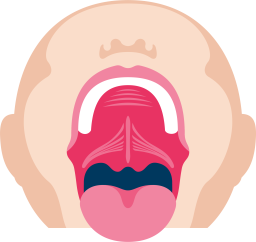
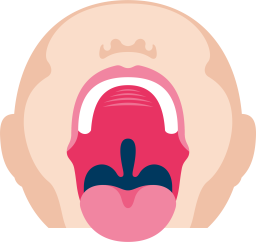
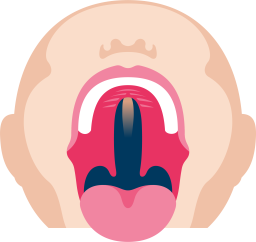
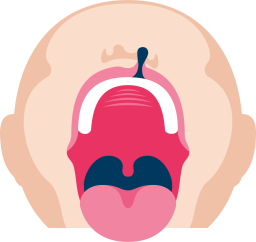
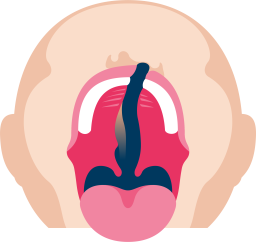
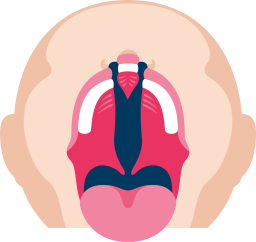
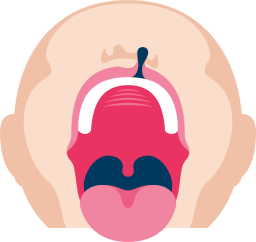

Cleft Syndromes
A cleft may occur as an isolated condition, but in some cases the cleft is associated with an underlying syndrome.
Cleft and speech
The speech therapists at Husuke assess how the cleft affects the child's speech. During the first months of life, the development of sounds made by babies is similar regardless of whether the baby has a cleft palate. Usually, babies begin to produce babbling with consonants at the age of 6 to 8 months. A cleft palate makes the babbling less varied, because an open palate usually prevents a child from creating the intraoral pressure needed to produce the pressure consonants K, P and T. As a result, only the M, N and/or V consonants are typically used. After palate correction operation, many babies also learn to produce pressure consonants.
Some children develop special features in their speech due to the cleft background. Typical features include nasal speech, buzzing or hissing of air flow through the nose during speech, and difficulty producing sharp pressure consonants. In addition, children with a cleft lip and palate may have more anomalies in sounds produced using the alveolar ridge (R, S, L, D). Linguistic problems and learning difficulties are slightly more common among children with a cleft.
If needed, the child will be referred to speech therapy, which usually takes place in the child's home municipality. Speech therapy is planned on an individual basis. Approximately one in five children with a cleft palate need surgery to improve speech. In most children, any problems related to speech production have eased by school age.
Units related to the service
Ward Avaruus, New Children's Hospital
On Ward Avaruus at New Children's Hospital, we treat musculoskeletal disorders and injuries, neurological and neurosurgical patients, and patients with…

Anesthesia and Surgery Unit, New Children's Hospital
In the Anesthesia and Surgery Unit of New Children's Hospital, we treat patients under the age of 16.

Plastic Surgery and HUSUKE Outpatient Clinic, Wound Center, Park Hospital
At the Cleft Palate and Craniofacial Center HUSUKE at Park Hospital, we treat cleft lip and palate patients, defective fusions of the cranial sutures…

Updated: 18.08.2026